

When I sat down with my friend Vanessa – a trans woman, lawyer by day and avid gamer by night – to chat about heroes, I expected a fun nerdy conversation. What I got was something deeper and more personal. We ended up co-authoring this reflective journey through our favorite media, examining how our definition of heroism has evolved alongside our own identities. From the big-bad warriors we idolized as kids to the emotionally complex characters we cherish now, our idea of a “hero” has shifted dramatically. And as two queer people passionate about games, movies, and stories, we found that our perspectives on heroes are intertwined with our experiences of growth, community, and authenticity.
Evolving Heroes: From Power to Authenticity
Back in her youth, Vanessa recalls, she gravitated toward the classic power fantasies – those invincible champions who could single-handedly vanquish villains without breaking a sweat. “I used to love characters who were basically walking power trips,” she laughs. Think of the hulking warriors or stoic superheroes who never show weakness. They were cool and made us feel safe in their strength. But over time, both of us found these flawless heroes less relatable. Real life isn’t so simple; we have flaws, fears, and feelings, so we craved heroes who did too.
Vanessa notes how her favorite archetypes changed as she grew into her identity. These days, she finds herself drawn to heroes who are emotionally intelligent, sometimes vulnerable, and even messy. It’s the broken and honest characters – the ones who cry, learn, and grow – that really resonate. Modern storytelling agrees: flawed heroes deliver a “refreshing dose of authenticity,” reminding us it’s okay to be imperfect and that weakness can become strength (daniclifton.com). A hero who struggles with inner demons or tough choices feels more human and inspiring than a buff demigod who never doubts himself. We see this trend everywhere, from literature to games: audiences connect with protagonists who have real problems and personal growth, not just shiny armor.
One great example we bonded over is Cloud Strife from Final Fantasy VII. At first glance, Cloud is the epitome of the cool, tough hero – an ex-soldier with a giant sword and aloof attitude. But as his story unfolds, we learn it’s mostly an act. Beneath the bravado is a young man who struggles to open up, carries trauma, and isn’t sure of himself at all (finalfantasy.fandom.com). In fact, Cloud eventually realizes (with a little help from his friends) that being a hero is about more than physical strength or fame (finalfantasy.fandom.com). He develops compassion and finds purpose in protecting others and the planet, not just chasing glory. That journey from a self-centered tough guy to an empathetic leader is what makes Cloud a true hero in our eyes. It’s also why, as queer fans, we appreciate him: Cloud’s wrestling with identity – even donning disguises and questioning who he really is – strikes a chord with anyone who’s had to figure themselves out (his playful crossdressing scene in FFVII is a light-hearted highlight, but the theme runs deeper too).
Vanessa points out that as a trans woman, she admires characters who embody authenticity over brute force. “There’s a certain courage in characters who are true to themselves,” she says, “even if they’re not the strongest or the boldest at first glance.” We’ve both noticed that when we were younger and dealing with insecurity, we clung to invincible heroes hoping to feel powerful. But as we’ve grown more comfortable in our skin, we celebrate heroes who show that heart matters more than muscles. The journey from power fantasy to authenticity mirrors our own growth. In a way, learning to live openly and vulnerably – say, coming out or embracing one’s true identity – is its own heroic quest. We champion heroes now who remind us that emotional honesty, compassion, and self-acceptance are heroic too.
The Big Brother Effect: Finding Strength in Support
One archetype that never fails to make Vanessa emotional is the “big brother” figure. There’s something profoundly comforting about a story where an older sibling-type character watches over the hero with unwavering support. We discussed why this trope hits so hard, and two examples leapt out: Big Hero 6 and The Great Ace Attorney Chronicles. In both, a big brother figure provides not just guidance, but an emotional core that defines the hero’s journey.
Take Tadashi Hamada in Disney’s Big Hero 6. Tadashi is the older brother we all wish we had. He’s gentle, goofy, and fiercely protective of his little brother Hiro. From patching up Hiro’s scrapes to encouraging his talents, Tadashi carries the responsibility of being a role model and caregiver (bighero6.fandom.com, bighero6.fandom.com). Vanessa lights up recalling the film’s early scenes: Tadashi sneaking Hiro into his lab, introducing him to friends, and effectively saying, here’s a place where you can belong and do good. Tadashi’s influence is so powerful that even after he sacrifices himself to save someone (in true heroic fashion) (bighero6.fandom.com), his legacy propels Hiro forward. The “big brother” becomes Hiro’s inspiration to form the Big Hero 6 team and use his gifts to help others. We both admit to crying when Baymax (the lovable healthcare-robot Tadashi built) shows Hiro video clips of Tadashi saying, “I’m proud of you.” It underscores how that archetypal big brother – whether present or gone – can emotionally anchor a hero. It’s not about being invincible; it’s about believing in you when you don’t yet believe in yourself.
Over in the world of courtroom drama, The Great Ace Attorney delivers a similar gut-punch with the friendship of Ryunosuke and Kazuma Asogi. If you’re unfamiliar, Ryunosuke is a young lawyer in Meiji-era Japan, and Kazuma is his dashing best friend – a sort of honorary big brother who mentors him. In the opening case, Kazuma literally stands by Ryunosuke’s side, coaching him through a trial. He’s the guy with the plan, dreaming of improving their country’s justice system. When circumstances rip Kazuma away, Ryunosuke is devastated, but he doesn’t give up. Instead, he is driven by Kazuma’s memory and ideals. Kazuma is set up as the ideal Ryunosuke thinks of in times of need (aceattorney.fandom.com) – the voice in his head saying “you’ve got this.” Vanessa compares it to how she often asks herself, “What would my big brother figure do here?” in tough situations. Even though Kazuma isn’t physically there for much of the story, his presence is felt; Ryunosuke constantly tries to live up to his example of honor and determination. That emotional resonance is huge. The Great Ace Attorney games subvert and deepen this trope later (no spoilers, but it gets complicated!), yet that initial dynamic – an inspiring figure whose belief in you fuels your own heroism – remains powerful. It shows heroism isn’t always solitary; sometimes it’s borne from the support and love of others. For queer folks, many of us find our “big brothers/sisters” in found family or mentors who guide us when our biological family might not understand. Seeing it reflected in media, whether through Tadashi’s sacrifice or Kazuma’s idealism, reassures us that needing support doesn’t make a hero weaker – it can actually be their emotional strength.
Solo vs. Squad: Western and Japanese Hero Narratives
One fascinating difference we chatted about is how Western media versus Japanese media often approach the idea of a hero. Culturally, there’s a contrast between the lone hero narrative and the ensemble or “team hero” narrative. Neither is absolute (you can find examples of each in any culture), but generally Western stories love their solitary chosen ones, while Japanese stories celebrate group dynamics and growth through friendship. We dove into why that might be – and what it means to us as queer viewers.
In a lot of Western classics, the hero stands apart. Whether it’s the superhero patrolling alone or the cowboy riding into the sunset, the story tends to focus on individual achievement. Western narratives often put a single protagonist at the center of the tale, with everyone else as sidekicks or obstacles to that person’s arc. This reflects a cultural tilt toward individualism: the hero’s journey is their journey, a personal odyssey of triumph. Even ensemble casts in Western media (say, The Avengers) often highlight how exceptional each member is on their own before they team up. The result? We get heroes who sometimes feel larger-than-life and isolated in their greatness.
By contrast, many Japanese games and anime favor a group-centric heroism. A concept in anime fandom we mentioned is nakama, a Japanese word roughly meaning “close friends as family.” In these stories, everyone in the friend group is crucial to overcoming challenges. The narrative spotlight is shared, and the growth is collective. In fact, research on storytelling notes that Western animation zeros in on a single hero, whereas Japanese anime focuses on a group of characters working together (atlantis-press.comatlantis-press.com). The lone Western hero often fights against the world, while the Japanese hero often fights with their world (their comrades) by their side. Culturally, this aligns with Japan’s more collectivist values of harmony and community (lunalane.art). We joked that in a Western RPG, you’d level up your chosen one to godlike status, but in a JRPG, you’re managing a party where every member has a role (and probably a heartfelt loyalty mission!). Think of Sora in Kingdom Hearts proclaiming “My friends are my power!” as he leans on Donald, Goofy, and Riku, or the Phantom Thieves in Persona 5 where only through everyone’s efforts (and shared bravado) can they steal hearts and change society. These stories tell us that no hero is an island.
For Vanessa and me, this East/West dichotomy has personal resonance. Western individualism gave us some strong role models of self-determination, sure. But the ensemble approach – where a team of misfits finds strength in each other – feels incredibly affirming, especially as queer folks who often rely on found family. We see ourselves in those ragtag bands of heroes who each contribute something unique. It’s like how our queer friend groups operate: one of us might be the tank (figuratively speaking) when another is down, and we swap roles as needed. There’s power in numbers and diversity. Culturally, neither approach is “better,” but we love how many Japanese narratives validate the idea that leaning on friends isn’t a weakness. As one analysis put it, Western heroes tend to be self-focused and assume leadership individually, whereas in Japanese stories numerous characters together take the lead, dedicated to the group (the nakama) (atlantis-press.com). For us, that emphasis on community over ego feels… well, super. It echoes the way the LGBTQ+ community achieves progress: collaboratively, lifting each other up.
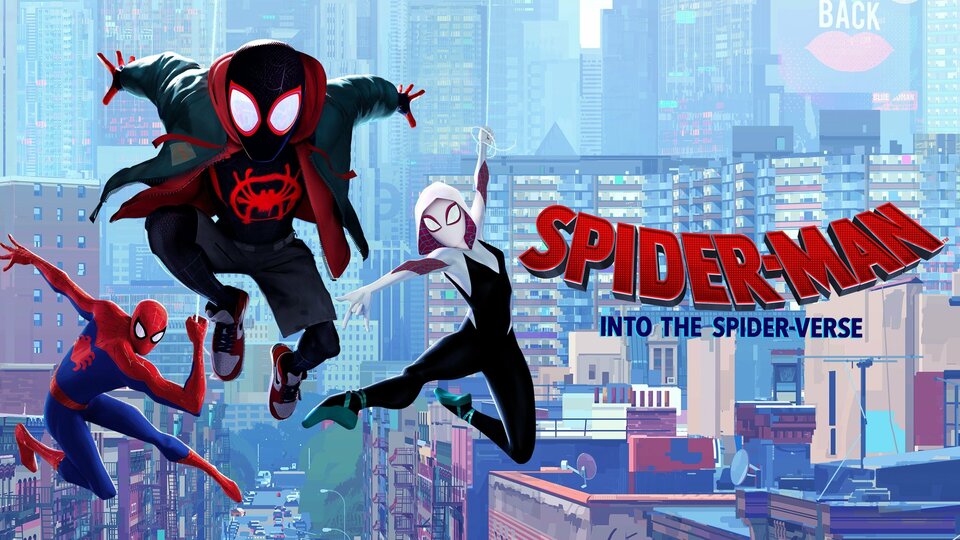
We also touched on how this difference shows up in story structure and theme. Western hero tales often follow the Hero’s Journey – a lone protagonist faces conflict, conquers it, and returns transformed. Japanese storytelling sometimes uses a four-act “kishōtenketsu” structure which doesn’t obsess over conflict the same way, focusing more on relationships, twists of perspective, and a harmony resolution. The ensemble of friends growing together fits that mold. In practical terms, compare a Western action movie where the climactic fight is the hero vs. the villain one-on-one, to a finale in an anime like Naruto or My Hero Academia where teamwork and combined resolve save the day. Even Spider-Man: Into the Spider-Verse, while American, interestingly adopts a multi-hero approach by bringing together Spideys from different dimensions. Miles Morales doesn’t win alone; he’s mentored and aided by a whole spider-family of sorts. (We’ll gush more about Spider-Verse soon – we’re both a little obsessed with it.) The takeaway for us was that heroism can be a shared experience. And when it is, it tells every kid (or adult) watching that their bonds and friendships are superpowers too. In a world that often celebrates the lone wolf, that’s a message worth web-slinging from the rooftops.
Finding Ourselves in the Story: Queer-Coded Heroes and Representation
When you grow up a little left of center, queer, nerdy, philosophical, you get used to reading between the lines. That’s where the good stuff hides. Subtext becomes survival, and stories become a kind of mirror. Vanessa and I have talked about this often: how, as queer fans, we learned to spot a coded character like a rogue detects traps. Not because they were explicitly out, but because they felt familiar in a way we didn’t yet have the vocabulary to name.
That’s the strange magic of queer-coding. It’s when a character seems to ping something inside you, maybe a gesture, a design choice, a line of dialogue that wasn’t meant to mean anything, but kind of does. Sometimes it was a creator quietly slipping something past censors. Other times it was pure projection, fan reclamation in action. Either way, we saw ourselves in those gaps.
Vanessa described growing up on what she called “crumbs of representation.” Tiny moments, scattered like Easter eggs across anime, games, and genre fiction, just enough to spark hope, rarely enough to feel full. But when you’re figuring yourself out, those moments can be everything.
We talked at length about Danganronpa’s Chihiro Fujisaki. A soft-spoken programmer, bullied for not being “manly enough,” who presents as female out of fear. The game makes a point to say it’s not a trans story. Still, for many trans fans, Chihiro became an emotional touchstone, a symbol of the closet, of fear and shame, and the yearning to live honestly. Even as an outsider to that experience, I could see how the character’s arc struck a nerve. There’s something deeply human in the fear of being seen and rejected, and something beautiful in how Chihiro’s mind lives on, helping others, even after they’re gone. It’s like a quiet anthem for resilience.
Vanessa told me that when she came out, characters like Chihiro hit harder. Suddenly, what once felt vaguely emotional clicked into focus. Before language catches up to identity, sometimes it’s art that makes the first introduction. That’s what makes these stories powerful: they reflect us back to ourselves before we even know what we’re looking for.
Not every example is a gut-punch. Sometimes it’s just fun. Take Cloud in Final Fantasy VII brooding warrior one minute, twirling in a dress at Wall Market the next. The game plays it for comedy, but it’s not mean-spirited. If anything, it’s weirdly affirming. Even the archetypal tough guy can rock some eyeliner and still save the world. That moment lingered. It cracked open a door that many of us didn’t even realize was closed.
Then you get characters like Kanji or Naoto from Persona 4, wrapped in so much ambiguity they could give a literature professor a migraine. Are they queer? Trans? Questioning? The game never quite says. And yet, those arcs – flawed, fumbled, fascinating – became lifelines for players grasping at identity in a world that still whispered, “Don’t say it out loud.”
We’re finally starting to get more explicit representation now, and that’s a gift. But I think many of us still hold a deep gratitude for the characters who helped us survive in the meantime. Not because they were perfect, but because they reached us. When no one in the spotlight looked like us, we found ourselves in the shadows, and made a home there.
One moment that stays with me: Into the Spider-Verse. Miles Morales says, “Anyone can wear the mask.” That line? It lands like a spell. It’s not just about identity or race, it’s about permission. It tells every kid who ever felt out of place that heroism isn’t about fitting a mold. It’s about showing up anyway. Vanessa and I both felt that line settle somewhere deep. “You can wear the mask.” That’s the message we’d been waiting for.
Queer-coded heroes may not have said it outright, but they showed us pieces of ourselves and those pieces matter. We didn’t always know what we were looking for. But when we found it? It changed everything.
Vulnerability is Strength: Kratos, Cloud, Chihiro – Heroes with Heart
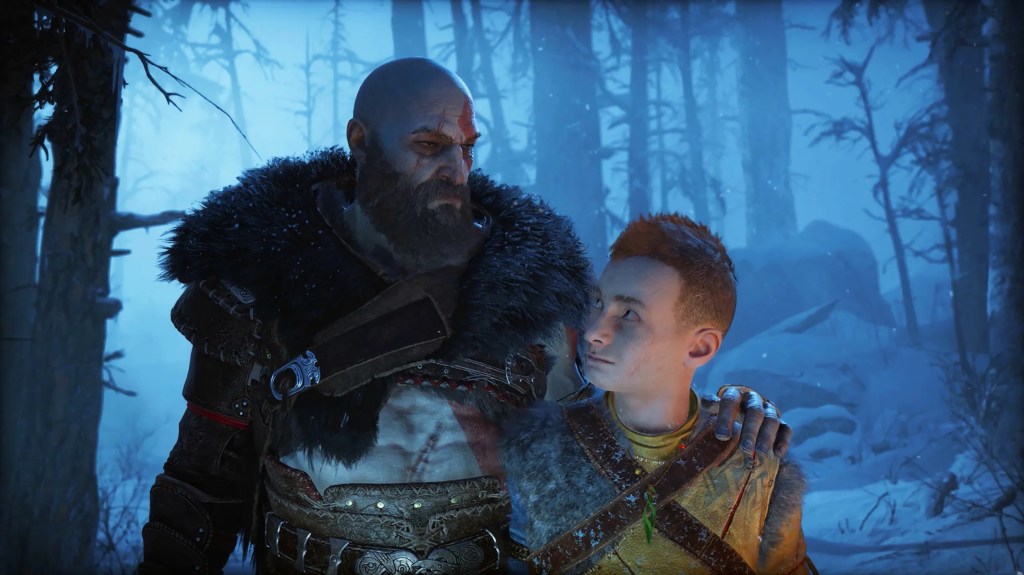
Not long ago, if you asked us to picture the ultimate “hero,” we might have described someone like Kratos from God of War – at least, Kratos as he used to be. In his early games, Kratos was an angry, muscle-bound god-slayer; the dude was practically the poster child for toxic masculinity and unchecked rage. But the God of War series pulled a brilliant move in 2018 by reimagining Kratos not just as a warrior but as a father. Suddenly, this character who once only growled and killed now had to care – to guide a young son, Atreus, through a dangerous world. And guess what? Kratos had to grow up emotionally himself. We see him struggle with how to communicate, how to be gentle, how to confront the regrets of his past so as not to pass that pain onto Atreus. The transformation is profound: Kratos evolves from a one-dimensional destroyer into a complex, loving father figure, proving that even the most brutal warriors can change (zleague.gg). He learns that showing concern, tenderness, and yes, vulnerability, is not weakness. In one touching scene, Kratos, who’s been emotionally distant, finally reaches out and pats Atreus awkwardly on the back – a small gesture that signals he’s opening up. By God of War: Ragnarok, we have a Kratos who will tear up when talking about protecting his kid. For Vanessa, who had braced herself for another macho power fantasy, this shift was a revelation. “I never thought I’d cry playing God of War,” she says, “but seeing Kratos struggle to hug his son got me.” It reinforced our belief that vulnerability can be a hero’s greatest strength. As one commentator noted, Kratos’ willingness to show vulnerability – to own and share his feelings – becomes a new kind of power, teaching players that true strength comes from honesty and emotional growth (thegoodplay.org). We absolutely love that message: being a hero isn’t about never falling down; it’s about having the courage to get back up and let others in.
We’ve already explored Cloud and Chihiro in terms of representation, but they also exemplify this idea of strength-through-vulnerability. Cloud, after his bravado is stripped away, is basically a kid who failed to get into the elite soldier program and feels like a loser. His world falls apart when he realizes the identity he’d been clinging to was partly a lie. Yet, in that broken state, his friends (Tifa, Aerith, etc.) help him realize they love him for who he is, not the cool soldier he pretended to be. Cloud’s moment of vulnerability – his breakdown, followed by acceptance of his true self and past – is the turning point where he grows into the hero who can save the world. It’s powerful to see a male JRPG hero essentially go to pieces emotionally and then rebuild stronger with the help of loved ones. It tells all of us, especially those who think we have to fake it to be worthy, that accepting help and embracing your true self is heroic.
And Chihiro, poor Chihiro – he believed himself weak, but we see that it took incredible courage for him to step forward and try to change his life. In a cruel twist, it was actually Chihiro’s emotional strength that intimidated his supposed “hero” friend Mondo, leading to that tragic outcome (aminoapps.com). How’s that for flipping the script? The traditionally strong, buff character (Mondo) couldn’t handle how brave and honest Chihiro was in confronting his weaknesses. In our eyes, that makes Chihiro heroic, even if the story casts his death as a victim scenario. He was brave enough to be vulnerable and seek growth. And later, when his AI program aids the surviving characters, it’s like Chihiro’s true strength – his intellect and kindness – lives on to save the day. We take a lot of solace in that. It reminds us that even if society sometimes “punishes” a person for being different or open (as it sadly does to many queer individuals), that openness can still inspire others and effect change.
Ultimately, all three characters – Kratos, Cloud, Chihiro – highlight that heroes aren’t defined by invincibility, but by resilience and heart. Kratos shows that a raging beast can become a gentle protector (and that breaking the cycle of toxic masculinity is epic in its own right). Cloud shows that a hero can cry and doubt and still be the one to swing the sword in the end – probably doing a better job at it with a clear head and full heart. And Chihiro shows that someone small and soft-spoken can have a will of steel, even if it’s not recognized in time. For Vanessa and me, these characters resonate because we’ve each had to find strength in our vulnerabilities. Vanessa often says that coming out as transgender – laying bare a truth about herself that others could have judged harshly – was the scariest yet strongest thing she’s done. “It felt like handing someone my exposed heart and hoping they wouldn’t break it,” she confides. “In that moment, I had never felt more vulnerable or more powerful.” That’s exactly the paradox these characters teach us: to be vulnerable is to be brave. After all, if a god of war can learn to hug, surely we can believe that tenderness and courage are two sides of the same coin.
Identity, Choice, and the Evolving Idea of Heroism
As our conversation wound down, we found ourselves waxing philosophical (as one does after a couple hours of coffee and passionate geekery). We tried to pin down what all these reflections might mean on a broader level. What does make a hero, ultimately? And how is that definition changing as our culture – and we ourselves – evolve?
One theme that kept popping up was identity. A hero’s journey is so often a journey of identity: figuring out who you are and what you stand for, and then acting on it. For queer people, that journey is intensely familiar. There’s a reason so many LGBTQ+ folks love stories like X-Men (mutants discovering their powers/puberty = obvious queer allegory) or Spider-Verse (with its celebration of diversity under the mask) or games like Undertale and Celeste that emphasize empathy and self-acceptance. We see our struggles and triumphs mirrored in those narratives.
In the end, Vanessa and I agreed that a hero is someone who chooses to be authentic and kind in a world that often pressures us to conform or hide. Heroism can be loud – wearing a cape, slaying dragons – but it can also be quiet: standing up for a friend, living your truth openly, loving who you love unapologetically. It’s like the heroes in our media taught us different facets of that lesson. From Persona, we learned the value of confronting your “shadow” self, integrating the parts of you that you’re afraid of, and how that makes you stronger and more whole. (We often joked that coming out felt like fighting our own Shadow version – scary, but ultimately liberating when you accept that hidden self and say, yes, that’s me.) From Kingdom Hearts, corny as it can be, we absorbed that our connections to others literally give us strength – Sora can’t even wield the Keyblade without his friends’ support at one point, which is such a lovely metaphor for how we rely on community. From Spider-Man, especially the Spider-Verse saga, we embraced that heroism isn’t about one predestined individual (sorry, Peter Parker) but about anyone, from any walk of life, choosing to do the right thing. That moment in Into the Spider-Verse when Miles takes his leap of faith, narrating that now-iconic line – “Anyone can wear the mask. You could wear the mask.” – gave us goosebumps. It told a generation of viewers that heroes can look like them, talk like them, be them.
And you know what? That’s exactly what we’re starting to see in reality. More and more, the people who inspire us in the news or our communities aren’t traditional “hero” stereotypes. They’re often individuals turning their authentic identities into sources of strength: the first openly trans politician fighting for equality, or a gay dad standing up for his family, or a group of diverse young activists teaming up (ensemble-style) to tackle climate change. It’s life imitating art, or maybe art finally catching up to life. Heroism has always been diverse; now the stories we tell are widening to reflect that truth.
As a trans woman in a field (law) that can be adversarial, Vanessa often feels like she’s living in a story of her own – one where choosing integrity and authenticity means sometimes being the “odd one out,” but also means she can be a beacon for others. She says some of her real-life heroes are those who simply dare to live truthfully and help others do the same. That could be a mentor who encouraged her during her transition or a colleague who stood by her against discrimination. “They’re not famous, they’re not on posters,” she smiles, “but they wore the mask when they needed to – or took it off, in our case – and that gave me courage to do the same.” It’s a beautiful full-circle: the heroes in our media taught us to find the heroes in our real lives, and even within ourselves.
The Hero’s Path Forward: A Future of Many Masks
If there’s one thing we’re taking away from this reflective journey, it’s that heroism is not a static concept – it’s alive, growing, and delightfully inclusive. The heroes Vanessa adored as a child were mighty and infallible because that’s what she thought she needed to be. The heroes she cherishes now are complex, compassionate, and sometimes queer (whether explicitly or in spirit), because that’s what the world has taught her true courage looks like. And she’s not alone. Many of us have undergone this shift in perspective. As our own lives have thrown challenges at us – identity crises, coming-out moments, finding community – we’ve sought out or reinterpreted heroes who guide us through.
The conversation between us – a trans gamer and her equally geeky co-author friend – felt, in a way, like writing our own chapter in the never-ending hero mythos. We realized that living authentically can be a form of everyday heroism. It might not come with boss music or XP gains, but it’s there in the quiet bravery of being yourself. Every time someone stands up and says “This is who I am” in a world that would rather they not, a heroic narrative unfolds.
Going forward, we’re hopeful. We’re already seeing games, movies, and comics embrace protagonists of all stripes: heroes of color, queer heroes, disabled heroes, heroes who battle mental health issues, you name it. The stories are catching on to what we’ve felt all along – that a hero isn’t measured by how well they fit a mold, but by what they do for others and how true they are to their principles. We cheer for the Captain Americas and Wonder Women, absolutely. But we also cheer for the Ellie in The Last of Us (a lesbian teen navigating a zombie apocalypse with compassion), the Madeline in Celeste (a trans girl literally climbing a mountain of self-doubt), or the ensemble of friends in She-Ra and the Princesses of Power (so much queer rep, so much love!). Our pantheon of heroes has expanded, and with it, our capacity to dream and to hope.
Vanessa and I end our chat on a fun note, predicting what the next generation of heroes might look like. Maybe a big-budget superhero movie with a trans lead is around the corner (if you’re listening, Marvel/DC, we’re ready!). Maybe the next beloved RPG will let us save the world and find a boyfriend or girlfriend regardless of our character’s gender – a few games already do, and it’s awesome. We imagine a future where a young queer kid won’t have to scan for subtext to see themselves in the hero; they’ll just see it, plain as day, and feel that warm glow of possibility. Because that’s the crux of it: heroes make us feel that we can be heroes too, in our own small or big ways.
As we wrap up, I look at Vanessa and see the heroine in her – not because she has superpowers or a perfect life (she’ll be the first to snort at that idea), but because she’s faced her fears with grace and turned around to help others with empathy. In her journey, I see echoes of all the stories we discussed. And in co-writing this piece, in sharing our nerdy heartfelt musings with all of you, we hope you see a bit of yourself reflected too. The question “What makes a hero?” might not have one answer, but we’re pretty sure of one thing: heroes grow and change, just like we do. They teach us, inspire us, and evolve with us. And the more voices and identities we include in our hero narratives, the richer and more empowering those stories become.
So here’s to the flawed heroes, the big brothers and sister figures, the squads of nakama, the queer-coded icons and openly queer trailblazers, the Kratoses who learn to soften, the Clouds who find their real sky, the Chihiros who find courage, and the everyday folks who decide to care. Here’s to us, all of us, wearing whatever masks or capes we choose – or no mask at all, just a big smile of knowing who we are. In the words of a certain web-slinger’s multiverse adventure: anyone can wear the mask. How we wear it is up to us, and that choice – that choice – is where the heroism truly lies.
The story of what makes a hero is still being written, and it’s one we’re all a part of.

 UhVyn
UhVyn 
Leave a comment