

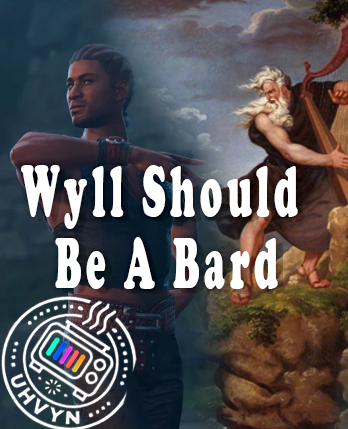
In Baldur’s Gate 3, Wyll, the self-proclaimed Blade of Frontiers, is a warlock by class – but is he truly a warlock in spirit? While he’ll cast Eldritch Blasts and has pact magic, I don’t think this is enough to say he’s a warlock. Wyll feels more like a bard than a warlock, not because of his spells, but because of his personality, reputation, and legend. But to explore this fully, let’s dive into the real history behind bards and warlocks. What did these roles mean historically, and where does Wyll truly fit?
The History of Bards and Warlocks: More Than Classes
Bards: Storytellers, Historians, and Heroes
The term “bard” comes from Celtic origins, describing poets and storytellers who preserved history through music and verse. Figures like Orpheus, whose music could charm the gods, and Shakespeare, a master of immortalizing human experience through words, embody bardic traits of inspiration and legend-building.
Wyll reflects this spirit: he crafts his legend as the Blade of Frontiers, not only through battle but through reputation and charisma. Like Orpheus, his deeds inspire both friends and foes – goblins tell of his heroics in campfire tales, and his title carries renown through Hell itself. His charm and theatrical persona align with the bardic tradition of living through story and song.
Warlocks: Oathbreakers, Traitors, and Bargain-Makers
The word “warlock” stems from the Old English wærloga, meaning “oathbreaker.” Historically, warlocks were seen as those who traded their souls for power, such as Faust, who sold his soul for knowledge, and Gilles de Rais, who turned to dark rituals for influence.
“Woer” and “waer” were old Germanic words for truth, faith, or oath.
“Loga” or “Lugo” were the words for a liar, or breaking.
However, Wyll’s pact challenges this archetype. While Faust and de Rais sought power for themselves, Wyll made his pact to save Baldur’s Gate, sacrificing his freedom for the greater good. His actions break from the traditional warlock narrative – he is not driven by power or ambition, but by duty and heroism.
*Spoilers Below*
Why Wyll Aligns with the Bardic Archetype
So, where does Wyll fit in? Despite his warlock class, Wyll’s actions, personality, and legend align far more with the bardic archetype.
1. The Heroic Storyteller
Wyll is known not just for his power, but for his reputation. He calls himself the Blade of Frontiers, a title that evokes adventure and heroism – much like a bard crafting their legend through deeds and song. He performs his heroism not for power, but for people, telling tales of his victories with flair and charm.
2. Charming, Heroic, and Folkloric
Wyll’s charisma and theatricality are classic bard traits. He dances, tells stories, and inspires those around him with his gallant persona. His nickname, the Blade of Frontiers, is whispered among goblins and devils alike, making him a folk hero more than a dark sorcerer.
3. Not an Oathbreaker, but a Protector
While warlocks are defined by broken oaths and self-serving pacts, Wyll’s pact with Mizora was made to save his people, not himself. Rather than breaking an oath, he fulfilled a higher one: protecting his city and people. This self-sacrifice is heroic and noble – more bard than warlock.
4. Not Power-Hungry, but Selfless
Unlike traditional warlocks who seek forbidden power, Wyll never chased his pact for personal gain. He endures it for the greater good. His power is a tool, not a goal.
So, Should Wyll Have Been a Bard?
While Wyll’s pact with Mizora defines his mechanics, his soul is that of a bard: a hero known through story, sacrifice, and song. He doesn’t chase power or break oaths; he lives his legend.
If Baldur’s Gate 3 had chosen to make Wyll a College of Swords Bard, the narrative would fit perfectly – his magic emerging from his reputation and heroic myth rather than from a fiendish pact.
But maybe that’s the point. Wyll challenges the boundaries of his class, proving that a hero is defined not by their powers but by their choices.
What do you think? Should Wyll have been a bard? Or does his story redefine what a warlock can be? Share your thoughts below!



 UhVyn
UhVyn 
Leave a comment